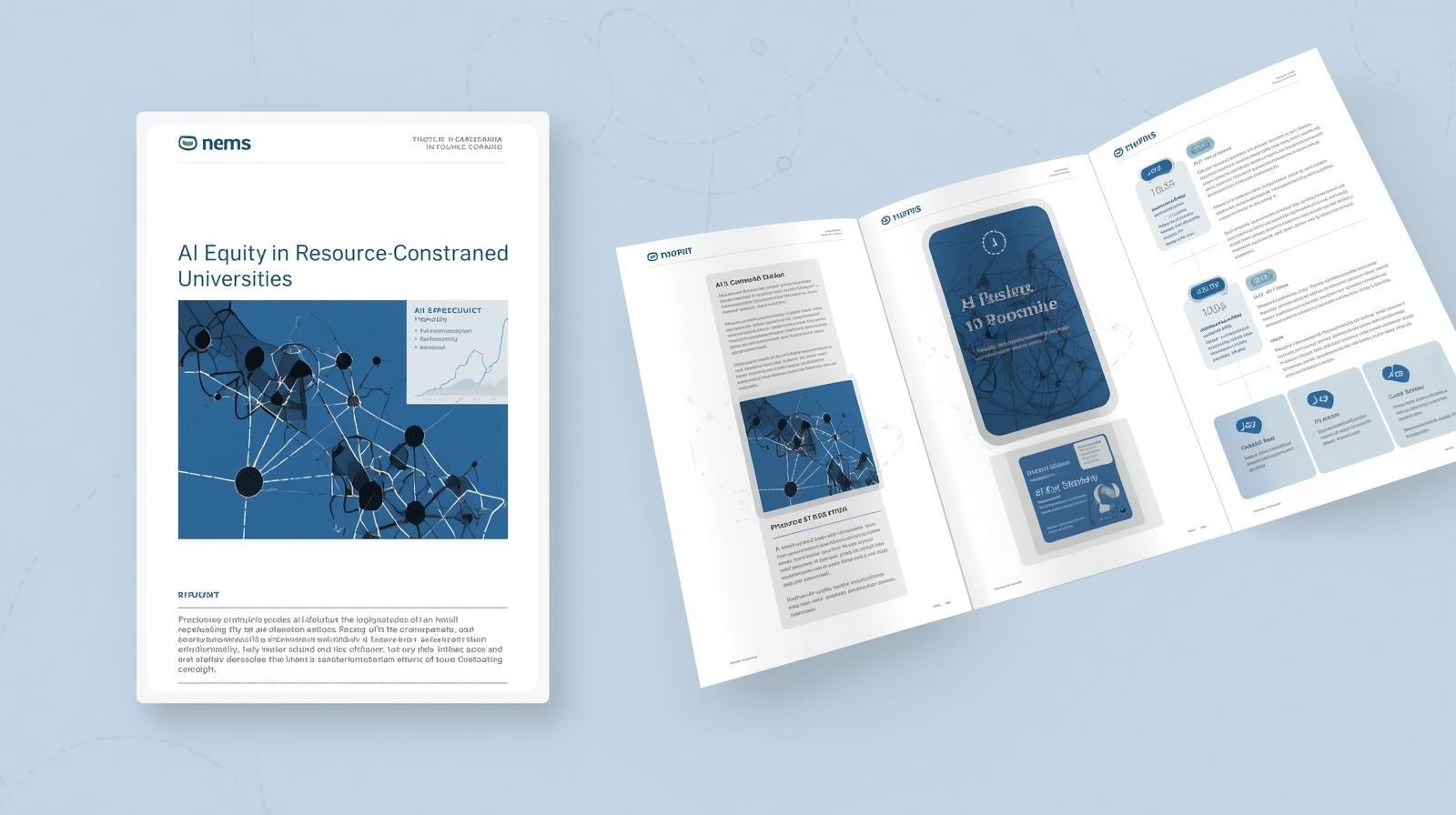

Ubuntu vs. The Algorithm: The Silent Crisis of AI in Our Universities
By: Eng. Saifuddin Ahmed AI Researcher | CTO at Taeziz21
As universities globally rush to integrate Generative AI into their curricula, institutions in the Global South are facing a critical—and largely unspoken—juncture. While the deployment of massive, cloud-based Large Language Models (LLMs) is hailed as a revolution, it implicitly assumes a user profile with high-end hardware and continuous connectivity.
This assumption ignores the infrastructural reality of the majority of our students. We are risking the creation of a “Cognitive Divide,” where academic success is determined not by intellectual merit, but by purchasing power and bandwidth stability.
The Triple Barrier: Why Standard Models Fail Us
The challenge is not just technical; it is structural. We face a wall built of three layers:
-
The Hardware Barrier: Standard models like GPT-4 require significant processing power. Mandating tools that cannot run on entry-level smartphones effectively creates a “technological caste system” within the classroom, locking out students who cannot afford high-end devices.
-
The Economic Barrier: For a student in a rural area, data is a scarce commodity. Furthermore, due to the “Tokenization Tax,” African and Arabic speakers often pay significantly higher data costs for processing the same amount of information compared to English speakers.
-
The Infrastructural Barrier: An education system designed around “Always-On” AI tools is fragile in regions facing frequent internet blackouts. It violates the principles of universal access by discriminating against students in peripheral areas.
The Ethical Trap: Ubuntu vs. “Survival of the Richest”
Beyond the hardware, the uncritical adoption of Western-centric AI models threatens our core social values.
If AI tutors are only accessible to the wealthy, we replace our traditional communal learning models—rooted in the philosophy of Ubuntu (“I am because we are”)—with a hyper-individualistic “survival of the richest” dynamic. Replacing peer-to-peer debate with isolated AI interaction risks “atomizing” students and eroding the social fabric of learning.
The Solution: A Pivot to “Offline-First” AI
To fix this, universities must shift from “Big AI” to “Smart AI”. The solution lies in three strategic pillars:
-
Adopt Small Language Models (SLMs): We must embrace research (like TinyStories) proving that models under 100M parameters can be highly effective. These models democratize access because they don’t require supercomputers.
-
“Offline-First” by Design: Educational tools must be engineered to function locally on the student’s device (Edge Computing). A student in a remote village should be able to access an AI tutor without consuming a single byte of data.
-
Human-in-the-Loop Pedagogy: We must use AI to facilitate community discussion, not replace it.
Conclusion
Technology should be a bridge, not a barrier. By embracing Sovereign, Small, and Offline AI architectures, our universities can lead the world in defining what “AI for Good” truly means—not just faster processors, but fairer societies.
References:
-
Google DeepMind: AI Research Foundations.
-
Eldan, R., & Li, Y. (2023). “TinyStories: How Small Can Language Models Be?”.
-
UN IGF Coalition: “AI from the Global Majority”.
-
African Declaration on Internet Rights and Freedoms.