
The Algorithmic Shield: Engineering “Automated Newsrooms” to Counter Deepfakes in Conflict Zones
By: Eng. Saifuddin Ahmed AI Researcher | CTO at Taeziz21
Introduction: When Truth Becomes a Scarce Commodity
The old adage warns that “a lie can travel halfway around the world while the truth is still putting on its shoes.” In 2024, the lie isn’t just traveling; it is replicating automatically.
We are living in a pivotal moment. The World Economic Forum’s (WEF) Global Risks Report 2024 classified “Misinformation and Disinformation” as the number one global risk, surpassing even interstate conflict and climate change over the short term.
For journalists in fragile conflict zones—such as Sudan or Gaza—the challenge is no longer just a rumor; it is a technical deluge. Europol estimates that by 2026, as much as 90% of online content may be synthetically generated or manipulated.
Facing this “data tsunami,” the human journalist stands defenseless. Traditional verification tools are too slow and too costly.
As an engineer and researcher, the question I pose is: How do we shift from “manual defense” to “algorithmic deterrence,” building AI Agents that serve as the first line of defense for the truth?
1. The Diagnosis: Why Traditional Models Fail
To engineer a solution, we must quantify the crisis. The math is alarming:
-
Velocity: A landmark study by MIT (published in Science) proved that false news spreads 6 times faster than the truth on platforms like X (formerly Twitter).
-
Economic Cost: Disinformation costs the global economy approximately $78 billion annually, according to a study by the University of Baltimore. In war zones, the cost is not just financial; a fabricated WhatsApp message can ignite real-world violence.
Attempting to fight this machine with manual searching—or even standard ChatGPT—is an engineering flaw. Large Language Models (LLMs) are designed for creativity, not accuracy. They are prone to “hallucinations,” often inventing plausible but non-existent sources to fill gaps.
2. The Engineering Solution: From Chatbots to “Agents”
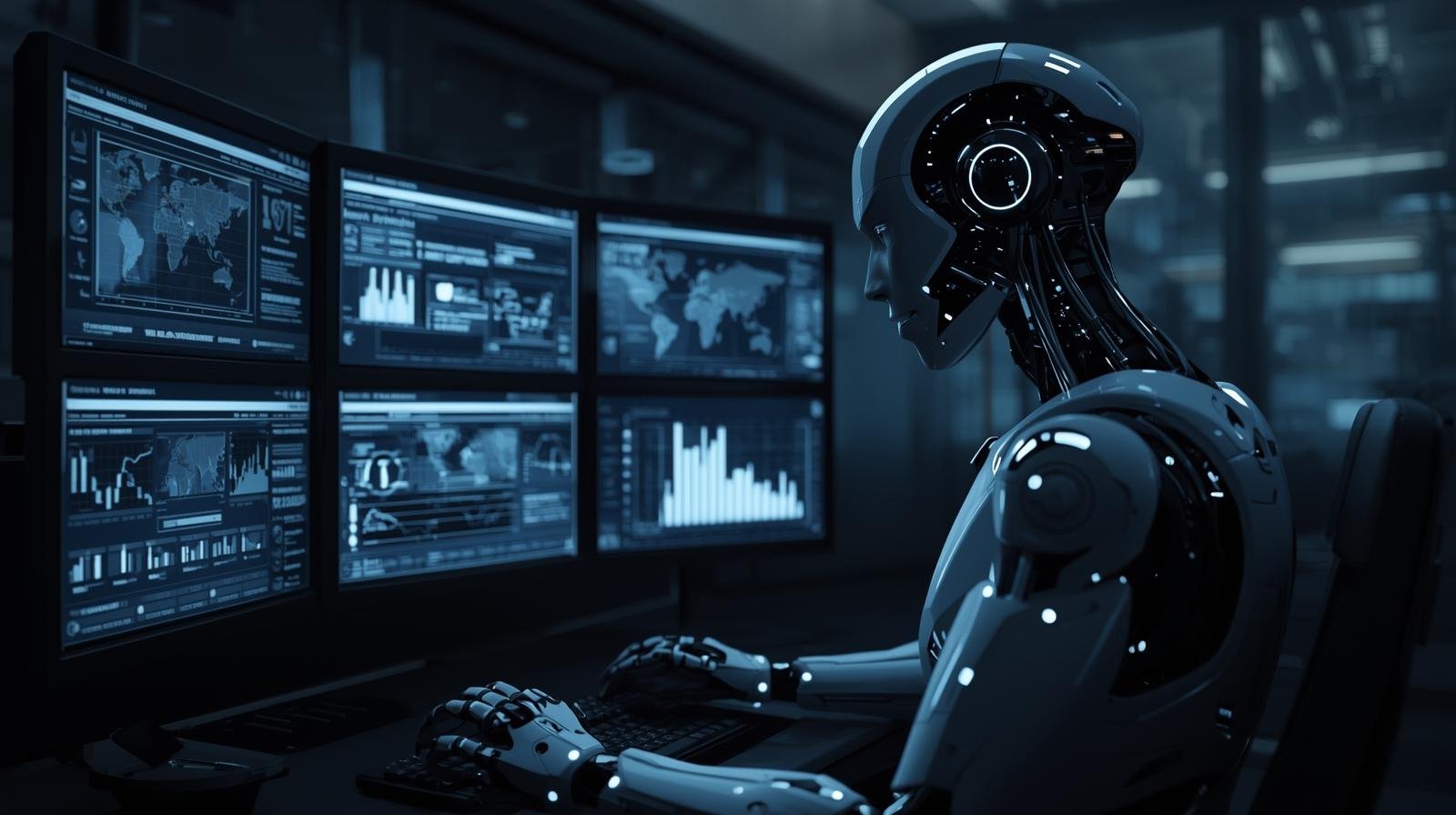
The solution we are developing and testing at Taeziz21 is not a chatbot. It is an integrated system based on RAG (Retrieval-Augmented Generation) architecture, fused with Agentic Workflows.
Our proposed “Digital Investigator” consists of three software layers operating in a sequential chain:
A. Layer 1: The Listener Node
Instead of waiting for news, this agent scans data streams from social platforms.
-
Technical Task: Using NLP algorithms for Text Classification to isolate “Verifiable Claims” (events, locations, dates) from mere opinions.
-
The Challenge: Handling local dialects (e.g., Sudanese Arabic). Here, we deploy Small Language Models (SLMs) fine-tuned on local datasets to understand context (e.g., detecting slang terms for “clashes” that standard models miss).
B. Layer 2: The Tool-Using Agent
This is the system’s “brain.” The agent does not rely on its internal memory; it has permission to execute external APIs:
-
Reverse Search: Scanning media via tools like Google Lens API to detect recycled footage.
-
Geolocation: Cross-referencing video landmarks with satellite imagery.
-
Archiving: Querying trusted databases (news agency archives) to verify history.
C. Layer 3: The Confidence Scorer
Finally, the system does not output a naive “True/False.” It generates a Probabilistic Report.
-
Output Example: “Claim Probability: False (95%). Reason: The attached image originates from Syria (2018), not Khartoum (2024). Source: AFP Archive.”
3. Practical Application: Sustainability & Social Impact
At Taeziz21, we believe in “Tech for Good.” This model is not science fiction; it is an urgent necessity for two reasons:
-
Protecting Social Peace: In the absence of verified information, rumors fill the void. AI Agents reduce verification time from hours to seconds, killing rumors in their infancy.
-
Empowering Journalists: Instead of a journalist spending their day watching hundreds of hours of raw footage, AI performs the initial triage, freeing the human to focus on deep analysis and storytelling.
Conclusion: Technology as a Shield, Humans as the Compass
The arms race between “deepfake algorithms” and “detection algorithms” will not end soon. However, by adopting smart engineering strategies, we can transform AI from an instrument of chaos into a Shield for Truth.
Digital Sovereignty today means more than owning servers; it means possessing the technical capacity to protect the national narrative from automated distortion.
References & Further Reading:
-
World Economic Forum – The Global Risks Report 2024.
-
Science Magazine – The Spread of True and False News Online (Vosoughi et al., MIT).
-
Europol Innovation Lab – Facing Future Challenges in Law Enforcement.
-
CHEQ – The Economic Cost of Bad Actors on the Internet.